
Why blood in urine should never be ignored
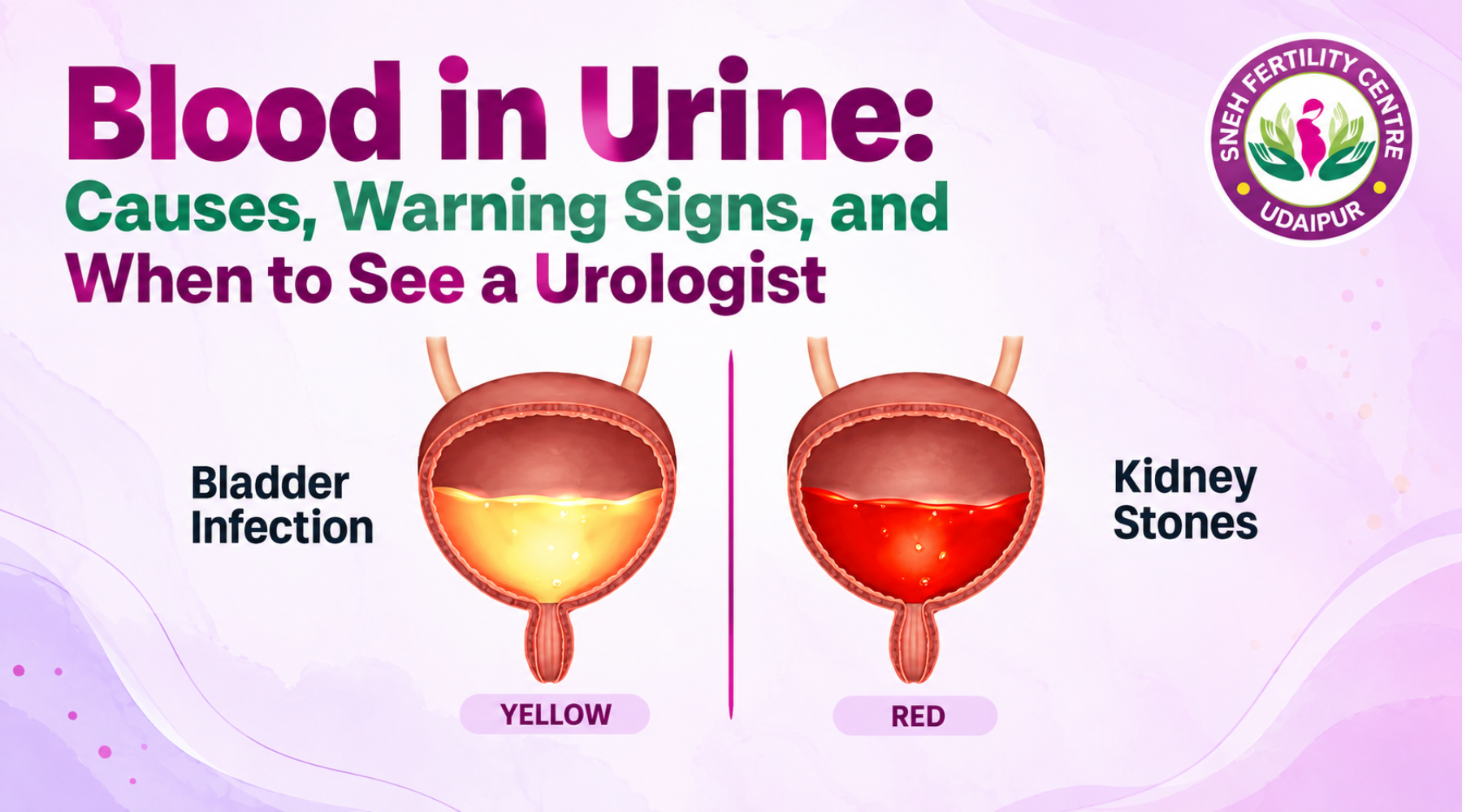
Seeing blood in your urine can be alarming. The urine may look pink, red, brown, or tea-colored. Sometimes, blood is present only in a urine test and cannot be seen with the naked eye. This is called microscopic blood in urine.
Blood in urine is medically known as hematuria. It can happen due to a simple urinary infection or a kidney stone. However, it can also be linked to conditions that need prompt medical attention. This is why it is important to consult a urologist in Udaipur if you notice blood in your urine, even if it happens only once.
At Sneh Fertility & Urology Centre, the focus is on finding the exact cause through proper tests and guiding patients toward the right treatment.
What blood in urine can look like
Not everyone experiences blood in urine in the same way. In some people, the colour change is clearly visible. In others, it is found during a routine health checkup.
Blood in urine may appear as:
- Light pink urine
- Bright red urine
- Brown or cola-colored urine
- Small blood clots in urine
- Blood detected only through a laboratory test
Visible blood in urine is called gross hematuria. Blood that is only found on a urine test is called microscopic hematuria. Both need medical evaluation because the cause cannot be confirmed by appearance alone.
Common causes of blood in urine
Blood in urine can develop anywhere along the urinary tract. This includes the kidneys, ureters, bladder, prostate, and urethra.
Some common causes include:
- Urinary tract infection
- Kidney stones or ureteric stones
- Bladder infection
- Kidney infection
- Enlarged prostate in men
- Prostate infection
- Injury to the urinary tract
- Strenuous exercise
- Certain blood-thinning medicines
- Kidney disease
- Bladder, kidney, or prostate conditions
A urinary tract infection may cause blood in urine along with burning, frequent urination, lower abdominal discomfort, and strong-smelling urine. Kidney stones can cause sharp pain in the side or back, nausea, vomiting, and blood in urine.
Men may experience hematuria due to an enlarged prostate or prostate inflammation. The urology services at Sneh Fertility & Urology Centre provide evaluation for urinary infections, kidney stones, prostate conditions, and other urological concerns.
Blood in urine and kidney stones
Kidney stones are a common cause of blood in urine. A stone can scrape or irritate the lining of the kidney, ureter, or bladder as it moves through the urinary tract. This can lead to visible or microscopic bleeding.
You may have a kidney stone if blood in urine occurs with:
- Severe pain in the back or side
- Pain moving toward the lower abdomen or groin
- Burning while passing urine
- Nausea or vomiting
- Frequent urge to urinate
- Difficulty passing urine
Small stones may pass naturally, but larger stones may block urine flow or cause severe pain. If needed, a urologist may recommend medicines, shockwave treatment, laser treatment, or endoscopic stone removal based on the stone’s location and size.
Blood in urine in men and prostate concerns
In men, blood in urine may sometimes be related to prostate enlargement, infection, or other prostate conditions. Men may also notice weak urine flow, frequent urination, dribbling, or waking at night to pass urine.
These symptoms should not be treated as a normal part of ageing without proper testing. Early assessment helps rule out infection, stones, prostate enlargement, and more serious causes.
For men who also have erectile difficulties, low sexual desire, infertility concerns, or hormonal symptoms, an andrologist in Udaipur may provide additional support for male reproductive and sexual health.
When blood in urine needs urgent medical help
Blood in urine should always be discussed with a doctor. However, some symptoms need urgent medical attention.
Seek medical care quickly if you have:
- Heavy bleeding or blood clots in urine
- Severe pain in the back, side, or lower abdomen
- Fever or chills
- Nausea and repeated vomiting
- Difficulty or inability to pass urine
- Dizziness, weakness, or fainting
- Reduced urine output
- Blood in urine after an injury
- Blood in urine during pregnancy
A blocked urinary tract with infection can become serious. Do not wait for symptoms to improve on their own when pain, fever, or trouble urinating is present.
How a urologist finds the cause
A urologist in Udaipur may begin by asking about symptoms, medicines, previous urinary infections, kidney stones, smoking history, and family history. The doctor may also perform a physical examination.
Tests may include:
- Urine routine and urine culture
- Blood tests to check kidney function
- Ultrasound of the kidneys and bladder
- CT scan in selected cases
- Cystoscopy to examine the bladder from inside
- PSA or prostate evaluation in men when appropriate
- Tests for infection, stones, or kidney disease
The right tests depend on age, symptoms, medical history, and whether blood is visible or microscopic. It is important not to self-diagnose or start antibiotics without a urine test when possible.
Treatment depends on the cause
There is no single treatment for blood in urine. Treatment is planned after the cause is identified.
For a urinary infection, the doctor may prescribe antibiotics based on urine test results. Kidney stones may need pain relief, medicines, laser treatment, or endoscopic procedures. Prostate conditions may be managed with medicines or procedures depending on severity.
If the cause is linked to a woman’s pelvic or reproductive health, a gynecologist in Udaipur can help assess whether the bleeding may be coming from the urinary tract or the reproductive tract. The gynecology team also provides pelvic health and urinary incontinence evaluation for women.
How to protect your urinary health
You cannot prevent every cause of blood in urine, but a few daily habits may support urinary health:
- Drink enough water throughout the day
- Do not hold urine for long periods
- Complete the full course of prescribed antibiotics
- Avoid smoking and tobacco
- Maintain a healthy weight
- Limit excess salt if you are prone to kidney stones
- Attend follow-up visits if blood in urine returns
- Seek treatment early for burning urine, fever, or urinary pain
If you have recurrent kidney stones, recurring urinary infections, or long-term urinary symptoms, regular follow-up can help prevent complications.
Why timely evaluation matters
Blood in urine may be due to a simple and treatable condition. Still, it can also be the first sign of a urinary problem that needs early care. Delaying evaluation may allow infection, blockage, kidney damage, or another condition to become worse.
At Sneh Fertility & Urology Centre, patients can receive evaluation for urinary symptoms, kidney stones, prostate concerns, male reproductive health, and women’s pelvic health concerns. The aim is to provide clear answers and the right treatment plan without unnecessary delay.
Blood in urine should never be ignored. A simple urine test and proper urology evaluation can identify the cause and guide treatment early. Prompt care protects your urinary health and gives you peace of mind.