Understanding Kidney Stones and Why They Cause Pain
Kidney stones are hard deposits that form inside the kidneys. They develop when minerals and salts in the urine become concentrated and form crystals. Over time, these crystals can join together and become stones.
Some kidney stones are very small and may pass through urine without causing major problems. Others can become larger or get stuck in the urinary tract. When this happens, they can cause intense pain and may need treatment.
At Sneh Fertility & Urology Centre, kidney stone treatment begins with finding the stone’s size, location, and effect on the urinary system. This helps the doctor decide whether the stone may pass naturally or whether a procedure is needed.
Common signs of kidney stones
Kidney stone pain can start suddenly. It often begins in the side or back and may move toward the lower abdomen or groin. The pain may come in waves and become very severe.
Common symptoms include:
- Sharp pain in the back, side, lower abdomen, or groin
- Burning or pain while passing urine
- Blood in urine
- Frequent urge to urinate
- Cloudy or foul-smelling urine
- Nausea or vomiting
- Fever or chills if infection is present
- Difficulty passing urine
Fever, chills, severe pain, vomiting, or reduced urine output may be signs of an urgent problem. A blocked urinary tract with infection needs immediate medical care.
When can a kidney stone pass naturally?
Small stones may pass naturally through urine, especially if they are located lower in the ureter, the tube that carries urine from the kidney to the bladder. The doctor may recommend drinking adequate fluids, pain medicines, and medicines that relax the ureter to help the stone pass.
However, a patient should not simply wait without medical advice. A scan may be needed to confirm the stone’s size and location. The doctor may also monitor whether urine is flowing normally and whether there is any infection or kidney swelling.
Even small stones can cause serious discomfort. Larger stones are less likely to pass on their own and may need active treatment.
When Laser Treatment May Be Needed
Laser treatment is often considered when a stone is too large to pass naturally, causes repeated pain, blocks urine flow, or leads to infection. It may also be recommended when a stone is affecting kidney function.
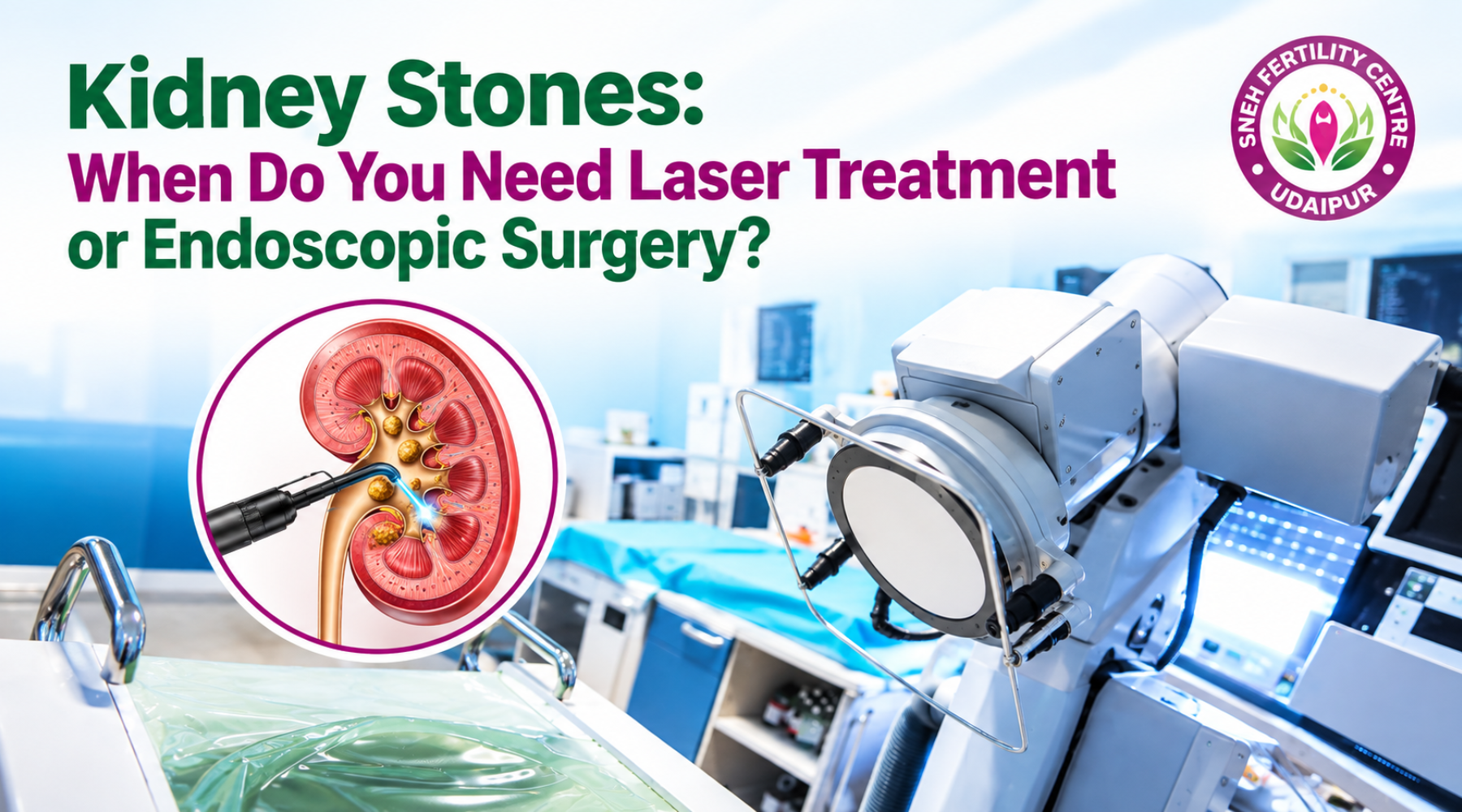
During laser stone treatment, the doctor may use a thin telescope-like instrument called a ureteroscope. It is passed through the natural urine passage, so there is usually no large cut on the body. The doctor reaches the stone and uses laser energy to break it into smaller pieces. These pieces can then be removed or passed in urine.
Patients looking for laser treatment in Udaipur should understand that laser treatment is selected based on the stone’s location, size, hardness, and the patient’s overall health. A urologist will recommend the safest method after reviewing imaging reports.
What Is Endoscopic Surgery for Kidney Stones?
Endoscopic surgery means treating kidney stones using small instruments and cameras. It allows the doctor to see and treat the stone without traditional open surgery.
Common endoscopic procedures include:
- Ureteroscopy or URS: A thin camera is passed through the urinary passage to reach a stone in the ureter or kidney. The stone may be broken with a laser or removed with small instruments.
- RIRS or retrograde intrarenal surgery: A flexible scope is used to reach stones inside the kidney. Laser energy is commonly used to break the stone into smaller fragments.
- PCNL or percutaneous nephrolithotomy: This procedure may be used for large or complex kidney stones. A small opening is made in the back to reach and remove the stone.
These techniques are minimally invasive compared with open surgery. The best procedure depends on the exact nature of the stone.
The urology services at Sneh Fertility & Urology Centre are focused on comprehensive care for urological conditions and reproductive health concerns.
How doctors choose the right treatment
There is no one treatment that suits every kidney stone. The doctor will consider several factors before suggesting laser or endoscopic surgery.
These include:
- Stone size
- Stone location
- Number of stones
- Severity of pain
- Presence of infection
- Urine blockage
- Kidney function
- Previous stone history
- Other medical conditions
For example, a small stone may be managed with medicines and monitoring. A stone stuck in the ureter may need ureteroscopy and laser treatment. A large kidney stone may need PCNL for safe and complete removal.
A proper scan and urine test help the doctor make the right choice. This prevents unnecessary procedures and helps plan treatment safely.
What to expect before and after the procedure
Before laser or endoscopic treatment, the doctor may advise blood tests, urine tests, and imaging. If there is an infection, it may need treatment before the procedure.
Most minimally invasive stone procedures are done under anaesthesia. The patient does not feel pain during the treatment. Depending on the procedure, a temporary stent may be placed in the ureter to help urine drain properly after surgery.
After treatment, patients may have mild burning while passing urine, slight blood in urine, or discomfort for a few days. These symptoms usually improve. The doctor will explain medicines, fluid intake, follow-up scans, and stent removal if a stent has been placed.
You can also visit Sneh Fertility & Urology Centre to learn about its urology services, diagnostic support, and specialist care.
How to reduce the risk of future stones
Kidney stones can return, especially if the underlying cause is not addressed. Prevention is an important part of treatment.
Helpful steps include:
- Drink enough water through the day.
- Do not hold urine for long periods.
- Limit excess salt in food.
- Avoid unnecessary calcium or vitamin supplements without medical advice.
- Maintain a healthy weight.
- Follow diet advice based on the type of stone.
- Get follow-up tests if stones keep returning.
In some cases, the doctor may send the removed stone for analysis. This helps identify the type of stone and guides personalised prevention advice.
When should you see a urologist urgently
Seek urgent medical help if you have:
- Severe or unbearable pain
- Fever or chills with urinary symptoms
- Persistent vomiting
- Blood in urine
- Difficulty passing urine
- Reduced urine output
- Known kidney stone with increasing pain
- Pregnancy with suspected kidney stone symptoms
Do not try to manage severe stone pain or infection only with home remedies. Timely medical care can protect kidney health and prevent complications.
FAQs about laser and endoscopic kidney stone treatment
Kidney stone treatment has become safer and more precise with laser and endoscopic procedures. If pain, urine blockage, infection, or recurring stones are affecting your life, do not delay medical evaluation. The right treatment can provide relief and help protect your kidneys.