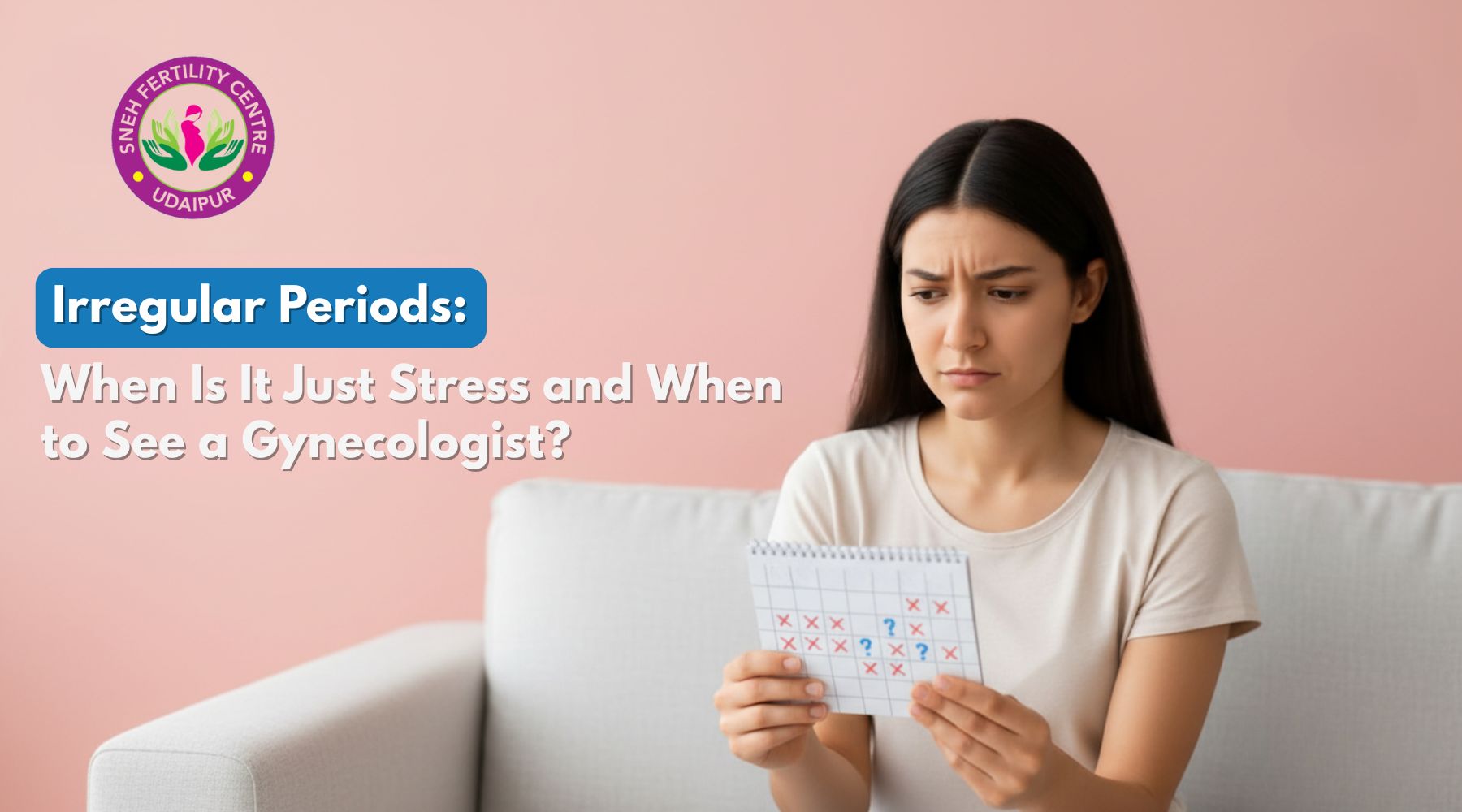
Irregular periods can be due to temporary stress, but they can also signal hormonal imbalance, PCOS, thyroid issues, or other conditions that need expert care from a gynecologist or infertility specialist in Udaipur. When cycle changes are frequent, severe, or accompanied by other symptoms, consulting a doctor for PCOS treatment in Udaipur or a fertility doctor in Udaipur helps protect both present health and future fertility.
What Counts as an Irregular Period?
A normal menstrual cycle usually ranges from 21 to 35 days and stays fairly similar each month.
Periods are called irregular when the gap between them keeps changing a lot, becomes very short, very long, or bleeding is unusually heavy or very light.
Common patterns of irregularity include:
- Periods coming earlier than 21 days or later than 35 days.
- Skipping periods for one or more months without pregnancy.
- Prolonged bleeding lasting more than 7 days, or frequent spotting between periods.
When It Might “Just” Be Stress
Stress affects the hypothalamus (the part of the brain controlling your hormones), which can delay or even temporarily stop ovulation and periods. This often happens after emotional stress, exams, job pressure, illness, travel, or sudden routine changes.
It may be mainly stress-related if:
- Your cycle was previously regular.
- You recently had a major stress event or sleep disturbance.
- You miss one period or notice a short-term change that returns to normal within 1–2 cycles.
In these cases, improving sleep, practicing relaxation (yoga, meditation, deep breathing), eating regular meals, and gentle exercise can help your cycle reset.
When Irregular Periods Signal a Deeper Problem
Ongoing irregular periods may indicate hormonal disorders like PCOS/PCOD, thyroid imbalance, high prolactin, perimenopause, or uterine issues such as fibroids or polyps.
You should see a gynecologist or infertility specialist in Udaipur if you notice:
- No period for 3 months (or more) and you are not pregnant.
- Cycles are very unpredictable for over 6 months.
- Very heavy bleeding with clots, severe pain, or dizziness.
- Symptoms like weight gain, acne, excess facial/body hair, hair fall, or dark skin patches (possible PCOS).
- Breast discharge without breastfeeding, or symptoms of thyroid problems (extreme fatigue, hair loss, constipation, palpitations).
A doctor for PCOS treatment in Udaipur can identify whether PCOS, thyroid issues, or other
hormonal imbalances are behind your irregular cycles and design a treatment plan that also supports fertility.
How a Gynecologist Evaluates Irregular Periods
During consultation, the doctor typically:
- Takes a detailed history of your cycles, stress levels, weight changes, and medications.
- Performs a physical and pelvic examination.
- Recommends blood tests for hormones (thyroid, prolactin, FSH, LH, and sometimes insulin and androgens).
- Advises pelvic ultrasound to look for PCOS, cysts, fibroids, or lining problems.
If you are trying to conceive, a fertility doctor in Udaipur may also assess ovulation, egg reserve, and your partner’s semen parameters so that both cycle regulation and pregnancy chances are addressed together.
Self-Care Tips While You Wait for Your Appointment
These steps cannot replace treatment but can support cycle health:
- Maintain a healthy weight; both significant underweight and overweight disturb hormones.
- Follow a balanced diet with whole grains, fruits, vegetables, and good fats; limit junk food and sugary drinks.
- Exercise regularly but avoid crash dieting or over-exercise.
- Sleep 7–8 hours daily and reduce screen time before bed.
- Avoid smoking and limit alcohol, as they can worsen hormonal imbalance and affect fertility.
If lifestyle changes alone do not regulate your periods within a few months, professional evaluation is essential rather than waiting longer.
FAQs on Irregular Periods and When to See a Gynecologist
| 1. How many irregular cycles in a row are a concern? If your cycle has been irregular for 3 or more consecutive months, or you miss periods |
| 2. Can stress and weight changes trigger PCOS? Stress does not directly “cause” PCOS, but along with rapid weight gain, poor diet, and lack of sleep, it can worsen insulin resistance and make PCOS symptoms and irregular periods more obvious. Early support from a doctor for PCOS treatment in Udaipur helps |
| 3. I am not trying to get pregnant; do irregular periods still matter? Yes. Irregular periods can increase the risk of anemia, endometrial (uterine) problems, and future fertility issues, so they should never be ignored even if you are not planning a pregnancy right now. |
| 4. When should I consult a fertility specialist instead of a general gynecologist? If irregular periods are combined with difficulty conceiving for 6–12 months (depending on age), prior miscarriages, or known PCOS, thyroid, or endometriosis, meeting a fertility doctor in Udaipur ensures both your cycle health and fertility are addressed together. |