
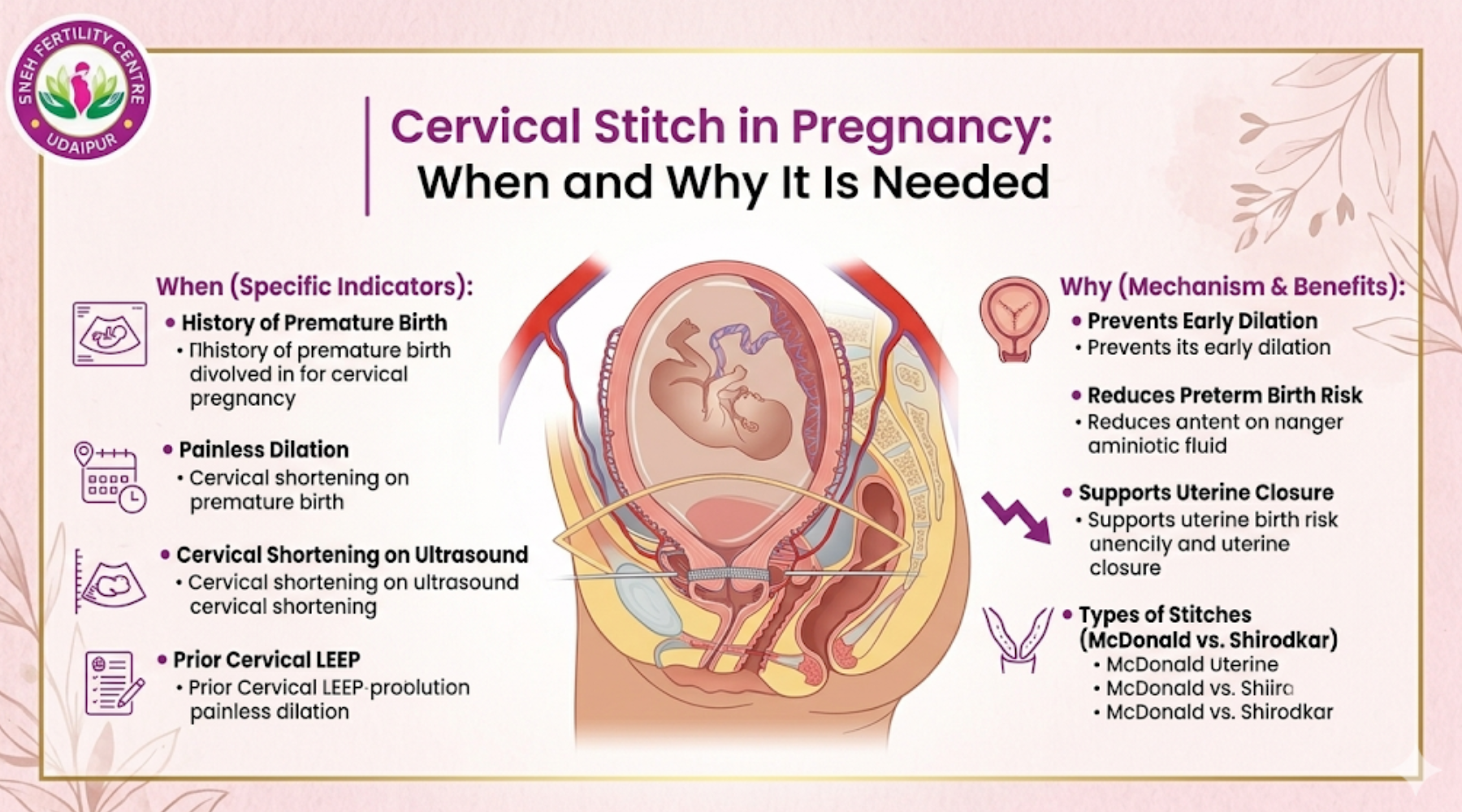
When a cervical stitch may be recommended during pregnancy
A cervical stitch, also known as cervical cerclage, is a small but important procedure used during pregnancy when the cervix may open too early. This can help support the pregnancy and reduce the risk of miscarriage or premature birth. For many women, hearing that a stitch may be needed can feel worrying at first, but in reality, it is often a preventive step taken by gynaecologists to protect both mother and baby.
At Sneh Fertility & Urology Centre, doctors carefully assess pregnancy history, cervical length, and risk factors before suggesting this treatment. The decision is never made casually. It is usually considered when there is a history of repeated pregnancy loss, early cervical opening, or signs that the cervix may not stay closed for the full pregnancy.
What cervical incompetence means in pregnancy
In some pregnancies, the cervix may become weak and begin to shorten or open without contractions or pain. This condition is often called cervical incompetence or cervical insufficiency. It can lead to pregnancy loss in the second trimester or early preterm birth if not managed in time.
A cervical stitch helps provide mechanical support to the cervix so it stays closed for longer. This gives the baby more time to grow safely inside the womb. Many women are only advised to consider this after a detailed evaluation by a specialist in fertility treatment or maternal care.
Why doctors suggest a cervical stitch
A cervical stitch is usually suggested when there is a clear medical reason to reduce risk in pregnancy. Some common situations include:
- A history of second-trimester pregnancy loss.
- Previous early delivery linked to cervical weakness.
- A short cervix found on ultrasound.
- Cervix opening too early in the current pregnancy.
- Certain uterine or cervical procedures in the past.
The aim is not to treat every pregnancy the same way, but to give support where needed. At a trusted gynaecologist consultation, the doctor may also review whether the patient has other fertility or reproductive health concerns that need attention during pregnancy planning.
How the procedure is done and what to expect
A cervical stitch is usually placed during the second trimester, often between 12 and 14 weeks if there is a known risk. In some cases, it may be done later if cervical shortening is seen during pregnancy. The stitch is placed through the cervix to help keep it closed until the baby is more developed.
The procedure is generally quick, and most women go home the same day or after a short observation period. Doctors may advise rest, follow-up scans, and certain precautions after the stitch is placed. The timing and method are always decided by the care team based on what is safest for the pregnancy.
What patients should expect after the stitch
After the procedure, some mild cramping or spotting may happen, but this is usually temporary. Doctors often advise avoiding heavy lifting, strenuous activity, or anything that may place extra pressure on the cervix. Regular follow-up is important so the pregnancy can be monitored carefully.
If you are already seeing a gynaecologist for fertility or pregnancy care, they may also guide you on warning signs such as pain, leakage of fluid, or unusual bleeding. Early communication with your doctor can make a big difference in keeping the pregnancy safe.
When a specialist evaluation becomes important
Not every woman needs a cervical stitch, and not every short cervix leads to pregnancy loss. That is why evaluation by an experienced specialist is so important. The doctor may decide based on your history, ultrasound findings, and overall pregnancy health.
If there are additional reproductive health concerns, you may also be referred to a specialist for related support. In some cases, this includes fertility treatment planning before conception or care from a gynaecologist during pregnancy. If a couple has broader reproductive or health concerns, a clinic offering both maternity and urology support can be helpful as well.
Why Sneh Fertility & Urology Centre can help
Pregnancy care often works best when it is personalized and handled with attention to detail. At Sneh Fertility & Urology Centre, patients receive support from specialists who understand both fertility and pregnancy-related concerns. This is especially useful when a woman needs close monitoring for cervical health, past pregnancy loss, or a high-risk pregnancy plan.
The clinic also offers connected care when reproductive health needs overlap with other concerns. For women who already know they may need support from a gynecologist or gynaecologists, having one place that understands the full picture can reduce stress and improve confidence during pregnancy.
FAQs about cervical stitch in pregnancy
A cervical stitch can be a quiet but powerful support for women at risk of pregnancy loss or early delivery. When recommended at the right time, it may help protect both the pregnancy and the baby’s future. With the right guidance from experienced gynaecologists and pregnancy care specialists, women can move forward with greater peace of mind and stronger medical support.