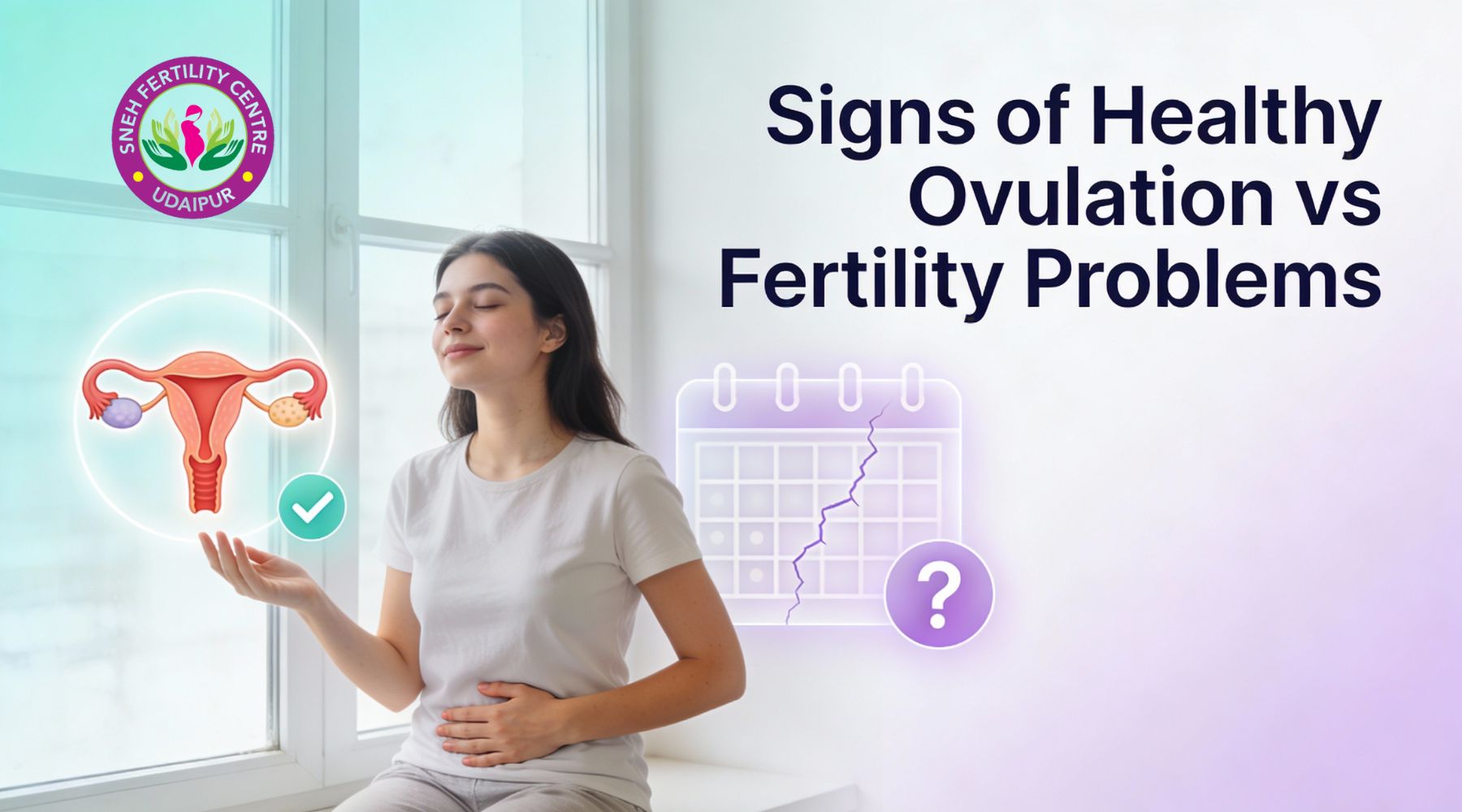
Signs of healthy ovulation include predictable cycles, mid-cycle changes in cervical mucus, slight mid-cycle pain, and regular premenstrual symptoms, while fertility problems often show up as irregular cycles, absent ovulation signs, or difficulty conceiving despite timed intercourse. Understanding this difference helps you decide when lifestyle tracking is enough and when to see an infertility specialist in Udaipur or a fertility doctor in Udaipur for further evaluation.
What Is Healthy Ovulation?
Ovulation is the release of a mature egg from the ovary, usually once per cycle, around the middle of your menstrual month. When ovulation happens regularly, it supports balanced hormones and gives a predictable fertile window for pregnancy.
Healthy ovulation typically occurs in cycles that are 21–35 days long, with only small variations from month to month. If your cycles are always extremely short, very long, or unpredictable, it can be a sign that ovulation is not happening regularly.
Clear Signs of Healthy Ovulation
You can often spot ovulation from simple body changes without any tests. Tracking these signs for a few months helps you understand your pattern and time intercourse better if you are trying to conceive.
Common signs of healthy ovulation include:
- Mid-cycle change in cervical mucus from dry or sticky to clear, stretchy, and slippery, similar to raw egg white.
- A slight rise in basal body temperature after ovulation, seen when temperature is charted daily.
- Mild lower abdominal pain or discomfort (mittelschmerz) around mid-cycle.
- Regular premenstrual symptoms such as breast tenderness, mood changes, or mild bloating.
When these signs appear consistently in a predictable pattern, ovulation is likely occurring regularly and is usually a good sign for fertility.
Warning Signs of Ovulation and Fertility Problems
Fertility problems may occur when ovulation is irregular, absent, or of poor quality. Some women have anovulatory cycles, where bleeding happens but ovulation does not occur.
Warning signs include:
- Very irregular cycles with changing gaps between periods.
- Missing periods for several months without pregnancy.
- Extremely heavy or very light bleeding.
- Cycles shorter than 21 days or longer than 35 days.
- Excess facial hair, acne, sudden weight gain, or hair thinning suggesting PCOS/PCOD.
In these situations, consulting an infertility specialist in Udaipur or a doctor for PCOS treatment in Udaipur is recommended to check for hormonal imbalance, PCOS, thyroid disorders, or high prolactin levels.
How Doctors Check Ovulation and Fertility
If conception is delayed or ovulation signs are unclear, a fertility doctor in Udaipur will evaluate your cycle history and symptoms and may suggest:
- Blood tests for hormones such as FSH, LH, prolactin, thyroid hormones, and progesterone.
- Pelvic ultrasound to assess ovaries, uterus, PCOS, cysts, or fibroids.
- Follicular tracking scans to confirm ovulation.
- Semen analysis for the partner when conception is delayed.
If PCOS/PCOD is diagnosed, a doctor for PCOD treatment in Udaipur may advise lifestyle changes, ovulation-inducing medicines, or fertility treatments like IUI or IVF when needed.
Supporting Healthy Ovulation Naturally
Many women can support ovulation through lifestyle improvements, which also enhance medical treatments.
- Maintain a healthy weight with balanced meals.
- Exercise regularly while avoiding excessive workouts.
- Manage stress through yoga, meditation, or breathing exercises.
- Get 7–8 hours of sleep and limit smoking and alcohol.
If cycles remain irregular or pregnancy does not occur, timely consultation with an infertility specialist in Udaipur helps guide the next steps confidently.
FAQs on Healthy Ovulation and Fertility Problems
1. Can I have regular periods and still not ovulate?
Yes. Some women experience bleeding without actual ovulation, especially with PCOS or certain hormonal medications. Tests and scans help confirm true ovulation.
2. How long should we try naturally before seeing a fertility specialist?
If under 35, consult after one year of trying. If 35 or older, or if you have irregular periods or PCOS, seek help after six months or earlier.
3. Does PCOS always mean I cannot ovulate naturally?
No. Many women with PCOS ovulate occasionally. With proper PCOS treatment in Udaipur, lifestyle changes, and medication, regular ovulation and pregnancy are often possible.
4. When should I worry that ovulation problems are causing infertility?
If you have irregular or absent periods, PCOS symptoms, or no pregnancy after 6–12 months of trying, early evaluation by an infertility specialist in Udaipur is advised.